Benjamin Banneker An American Pioneer By Jessica McElrath, About.com See More About: • banjamin banneker • inventors Courtesy of the National Archives. History Ads Benjamin Haydon American History Women in History History for Children Benjamin Franklin Dates: November 9, 1731 - October 25, 1806 Occupation: inventor, astronomer Unlike many African Americans at the time, Benjamin Banneker was not born into slavery. The maternal side of his family determined this fate. His grandmother, Mary Walsh, was a white Englishwoman who was sentenced to seven years of indentured servitude in America for stealing milk. After her servitude ended, she bought some land and two African slaves. She married one of them. His name was Bannaky, and they had many children, one of whom was named Mary. Like her mother, when Mary married, she bought a slave and married him. Mary and Robert had several children, including Benjamin Banneker. Banneker was born on November 9, 1731, just outside of Baltimore, Maryland. Benjamin Banneker Shows Aptitude in Math Banneker's education began early on. Banneker and his siblings were taught to read by their grandmother, Molly, who used the Bible as a lesson book. When Banneker was twelve, a Quaker named Peter Heinrich moved next to the Banneker farm. He established a school for boys, which Banneker attended. He excelled in mathematics, and even progressed beyond the ability of his teacher. When Banneker was twenty-one, his abilities were finally utilized. He met a man named Josef Levi who showed him a pocket watch. Banneker was so fascinated that Levi gave him the watch. He studied how it worked, drew a picture of it, and made mathematical calculations for the parts. He worked on building the clock for two years. In 1753, he finally completed it. It was made of wood and its gears were carved by hand. This was the first clock built in the United States. For more than forty years, the clock struck every hour. Banneker the Astronomer In addition to creating America's first clock, Banneker had an interest in astronomy. When Banneker's friend Andrew Ellicott died, he left him books on astronomy, scientific instruments, and a telescope. Banneker began to study astronomy and made mathematical calculations of the stars and constellations. He used these calculations to predict a solar eclipse that took place on April 14, 1789. Banneker’s Almanac Challenges Stereotypes His abilities in astronomy and mathematics led him to create an almanac in 1792. In addition to making all the calculations himself, it included information about the time of eclipses, weather forecasts, the hours of sunrise and sunset, festival days, holidays, and much more. It became a popular resource for Americans throughout the Middle States, and received fame in England and France. He published it for ten years. The publication of his almanac had special significance other than being just a useful resource. It challenged the popular belief of the time that African Americans were intellectually inferior to whites. In the preface of Banneker's 1796 almanac, the white editor issued this statement: “The labours of the justly celebrated Banneker will likewise furnish you with a very important lesson, Courteous Reader, which you will not find in any other almanac, namely, that the Maker of the Universe is no respector of colours; that the colour of the skin is no way connected with the strength of mind or intellectual powers; that although the God of Nature has marked the face of the African with a darker hue than his brethren, He has given him a soul equally capable of refinement.” Banneker's almanac served as a contradiction to the widely held belief that blacks were inferior. Banneker was not quiet about this contradiction. He was a social critic of slavery. In an attempt to promote change, he sent a copy of his first Almanac to Thomas Jefferson, who at the time was Secretary of State under President Washington. He enclosed a letter about the inconsistency of Jefferson's position about the equality of all men, while at the same time owning slaves. Jefferson replied eleven days later, and this was just the beginning of a long correspondence on the issue of slavery and the intellectual ability of blacks. Banneker’s Memory Saves the Day Among Banneker's talents was a remarkable memory. When President Washington decided to move the capital to Washington, he appointed Pierre Charles L'Enfant to build it. L'Enfant's plans consisted of the creation of boundaries and the layout of the streets and buildings. Upon Jefferson's request, Banneker was appointed as a member of the team. Things fell apart shortly after the planning began when L'Enfant resigned and took all the plans and maps with him to France. To everyone's amazement, Banneker recreated the plans from memory within two days. In his retirement years, Banneker spent the remainder of his life on his farm. By this time, he had gained the respect and admiration of many. He was so well known that guests from all over the world came to visit him. He died on October 25, 1806. Suggested Reading Benjamin Banneker QuotesBanneker Letter to Thomas Jefferson From Other Guides About Astronomy: Benjmamin BannekerAbout Inventors: Benjamin Banneker Related Articles • Benjamin Banneker Biography - First Afri... • Benjamin Banneker - Page 2 • Benjamin Banneker - Farmers Almanac • Thomas Jefferson's Letter to Be... • Benjamin Banneker Guide since 2000 Jessica McElrath African-American History Guide
skip to main |
skip to sidebar
_edited.JPG)


My Restored 89 Reatta
.JPG)
Riley The Fierce

YUM YUM

Jewish Women and the American Century

A PLANTATION EPIC

Hwy 84, McIntosh, Ga.

Hwy 84, Jesup, Georgia

DISH
-Booker+in+New+Hampshire.jpg)

WELCOME TO THE LOWCOUNTRY
YOU ARE VERY WELCOME TO VISIT THIS BLOG CREATED BY A VIRTUAL COMPUTER IDIOT. JUST TAKING TIME DURING HIS RETIREMENT HIATUS TO SHARE WITH YOU HIS TAKES ON EVERYDAY LIFE. IF I BORE YOU I APOLOGIZE. IF THE BLOG MAKES YOU YELL CRAP I'VE GOT YOUR ATTENTION. IF I MAKE YOU SKIP WITHOUT READING I'VE FAILED. IF I MAKE YOU THINK, I HAVE ACCOMPLISHED MY MISSION. ALL I ASK IS YOUR UNDERSTANDING AND EMPATHY FOR MY INITIAL FEEBLE ATTEMPTS.
lowcountry sunset
About Me

- rastus
- Just a small town boy that wants to share his musings on everyday life.
Why Am I keeping this journal?
To tell you the truth I am not positive myself. Guess I could have kept a private journal, but I am retired you see and I guess it makes me feel that I am going to work.
Another probable reason is that the older I get I reminence on days gone by and realize that there were some positives. Heck there maybe people out there that would like to know them.
Another probable reason is that the older I get I reminence on days gone by and realize that there were some positives. Heck there maybe people out there that would like to know them.
Getting Ready-packing for Adventure
My Restored 89 Reatta
My Faithful Traveling Companion
Riley The Fierce

WELCOME
Below are some of the examples of fiction and non-fiction books offered for purchase at the LOW COUNTRY BOOKSTORE- An online store that offers a variety of diverse readin, video and listening books at more than affordable prices. With topic ranging from history, science, religion to entertainment just to name a few. To review the selctions please click on the provided link. Books are stored in alphabetical order for you ease of viewing. Thank you.
Favorite Sites to Purchase
Princess Pamela"s Soul Food Cookbook
YUM YUM
PRINCESS PAMELA"S SOUL FOOD COOKBOOK
Nothing much to say about a good Soul Food cookbook except its all good. Pamala has included some recipes that when prepared will make you want to slap your mama. This is a collectible volume signed by the author herself and is no longer in print. If you are a collector of rare works Low COUNTRY BOOKSTORES is a great location.
The Journey Home
Jewish Women and the American Century
THE JOURNEY HOME
THE JOURNEY HOME - Jewish Women and the American Century. An account of the contributions that Jewish women have afforded american society and culture during the 20th Century. From suffrage to birth control, trade unionism to higher education, to civil rights to feminism to every aspect of popular culture, these women have been leading participants and shapers. Anarchists to Zionists, writers and Supreme Court Justices, rabbis and reformers; personalities as diverse as Emma Goldman, Sophie Tucker, and Gertrude Stein have left their indelible mark on the American century.
DWELLING PLACE
A PLANTATION EPIC
DWELLING PLACE----------A PLANTATION EPIC
The other day while on a book buying foray I ran across a book entitled "Dwelling Place" It is all about the saga of one of the founding settlers of my county. It contains missives, letters and written documents regarding rice plantation life. Remarkably enough this was a slave owner of compassion. The guy was somewhat scorned by his peers for the benevolent way in which he treated his slaves. He taught them religion, educated them and the poor whites of the area. He was a congregational minister that really thought the slaves were possessors of souls just as the Europeans were. A guy with some definite convoluted outlooks. It is in my opinion not the typical depiction of plantation life and definitely not typical of the treatment the Africans received at the hands of the Europeans.
Interesting read. Bought the book and added it to my online book collection. It along with a thousand other books ranging from topics as diverse as history, Zen Buddhism, self-help, cooking, wine tasting-Well you get the idea. In other words it is a very diverse collection. All can be seen and purchased ONLINE--amazon.com/shops/lowcountrybookstore. Thank you.
Interesting read. Bought the book and added it to my online book collection. It along with a thousand other books ranging from topics as diverse as history, Zen Buddhism, self-help, cooking, wine tasting-Well you get the idea. In other words it is a very diverse collection. All can be seen and purchased ONLINE--amazon.com/shops/lowcountrybookstore. Thank you.
SOUTHERN BARBEQUE-MY FAVORITE PLACES
HAVE EATEN BBQ IN MANY DIFFERENT PLACES BUT THERE IS NO BBQ BETTER THAN THE STYLE YOU GREW UP WITH. BELOW ARE TWO PLACES THAT HAVE BECOME FAVORITES.
Lige"s Place
Hwy 84, McIntosh, Ga.
Dave Madry
Hwy 84, Jesup, Georgia
SOUTHERN BARBEQUE
Southern Barbeque is a delicious dish if properly prepared and cooked. The tradition of cooking barbeque in its present day form originated in the slave holding states. The slaves cooked it and both master and slave enjoyed it. It became such a tradition for slaves to prepare the dish that even after emancipation a belief by both blacks and whites existed that barbeque could only be properly prepared, cooked and presented by blacks. In some sections of the south this belief holds true even today. Personally speaking good barbeque is good barbeque regardless of the racial identity of the cook. I have even experienced great barbeque at chain restaurants. Jim and Nick's in Bluffton, SC is a great example of Southern Barbeque. Let me stress Southern here. Texas bbq ain't spit. They use beef ribs instead of the ribs of the godly porker. Just ain't the same to a Geechie.
My favorite local bbq place is a pit owned and operated by a white guy by the name of Dave Madry. Dave's place is located on Hwy 84 just outside of and south of Jesup, Ga. Great bbq. The next great place is again on Hwy 84 headed in the other direction. Lige's place, located in McIntosh, Georgia. It is second to my palate only because of the fact I can't get to it often enough. Its owned by a black guy that owns about four small companies and only operates the place out of a love for bbq. Small takeout joint but then connoisseurs of bbq frequent a place for its barbeque. I am a bbq connoisseur and I eat bbq not ambience.
My favorite local bbq place is a pit owned and operated by a white guy by the name of Dave Madry. Dave's place is located on Hwy 84 just outside of and south of Jesup, Ga. Great bbq. The next great place is again on Hwy 84 headed in the other direction. Lige's place, located in McIntosh, Georgia. It is second to my palate only because of the fact I can't get to it often enough. Its owned by a black guy that owns about four small companies and only operates the place out of a love for bbq. Small takeout joint but then connoisseurs of bbq frequent a place for its barbeque. I am a bbq connoisseur and I eat bbq not ambience.
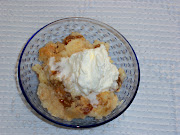
RICE PUDDING
This lowly rice pudding
This very appetizing dish that even an idiot like me can concoct and make pleasing to a wide array of people had its roots in the lowcountry of Georgia and South Carolina. Rice being a staple and plentiful for slaves found many uses in quite a few delectable dishes. Usually these dishes were stand alone due to the fact that the only sides came from gardens grown on plots allotted by slavemasters. Heck it was in their favor to allow the slaves to have gardens, cut down on food expense. Rice pudding started as a very simple dessert dish that was very attractive in that it had very few ingredients:Rice, sugar, salt, butter and milk.. wash rice, put in a baking dish with salt, sugar and butter. Pour over mixture with milk. Bake in slow oven (300 f) at least 2 and 1/2 hrs, stirring at least twice during first hour. Results-yummy. Present day options: raisins,nutmeg, cinnamon. Ingredients equation-you figure it out!!!
LOW COUNTRY BOIL
DISH
A geechie/gullah recipe-low country boil
Not having access to the choicest meals available to them during their forced passage to these shores. Slaves often time had to resort to creating dishes out of ingredients that were readily at hand. Most of the slaves being from Coastal West Africa were already familiar with gleaning the ocean and rivers to create dishes. Adding seafood procured from the waters to at hand vegetables, the slaves created a dish that is recognized internationally. Like all coastal people everywhere of poor resources that usually just threw whatever was at hand into a big pot for community serving; Geechies and Gullahs did the same. They created what is now now known as LOW-COUNTRY BOIL So here we go:
in a big pot of boiling water-throw in
quartered red potatoes, sausages of choice, Old Bay Seasoning,
crab/shrimp boil,simmer for awhile until all ingredients start reaching tender stage. Then add whole tomatoes, ( a sprinkling of rice grains if desired) bring to boil, cover, take off flame and let pot sit, (let various tastes intermingle). Then serve. Hell I ain't no cook so blast the ingredient formulas -learn like I did trial and error. Ha, a point- this dish consisted of any and everything that the slaves had at hand. Heck an aunt's family recipe called for the addition of neck bones.
in a big pot of boiling water-throw in
quartered red potatoes, sausages of choice, Old Bay Seasoning,
crab/shrimp boil,simmer for awhile until all ingredients start reaching tender stage. Then add whole tomatoes, ( a sprinkling of rice grains if desired) bring to boil, cover, take off flame and let pot sit, (let various tastes intermingle). Then serve. Hell I ain't no cook so blast the ingredient formulas -learn like I did trial and error. Ha, a point- this dish consisted of any and everything that the slaves had at hand. Heck an aunt's family recipe called for the addition of neck bones.
sitting on a rail/contemplating
New, Used, and Collectible books and VHS Videos
Blog Archive
Rice Milling, gender and slave labour in colonial South Carolina
New Georgia Encyclopedia
Burial of Bhutto
Labels
- A message to my readers (1)
- A WALK (1)
- Always Ready to travel (1)
- Banneker/Scientist (2)
- Chapel of Ease-St. Helena (1)
- Chrispus Attucks-Freedom Fighter (1)
- COOTER SOUP (1)
- creepy (1)
- Du Sable (1)
- East Coast Happenings (1)
- Harriet Tubman Freedom Fighter (1)
- Harris Neck (1)
- Hero (1)
- Hometown (1)
- Just Knocking About (1)
- JUST SOME STORED PHOTOS (1)
- Knocking About Con't (1)
- Letters Between Benjamin Banneker and Thomas Jefferson (1)
- Lying and Gator tails (1)
- Making Syrup (1)
- MAROONS OF FLORIDA (1)
- Penn Center (1)
- Reenactment at Sunbury (1)
- RETURN OF THE PRODIGAL DAUGHTER (1)
- RICE (1)
- Rice Production in Colonial South Carolina (1)
- RICE-GEORGIA (1)
- Savannah-A lazy Sunday Afternoon (1)
- SC (1)
- Seriously (1)
- Taking a break (1)
- This IS HOW THE TEXANS SAW THEM (1)
- THIS OLD HOUSE (1)
- THIS VOTING THING (1)
- Tomochichi (1)
Black Seminoles, Maroons, and Freedom Seekers in Florida
No comments:
Post a Comment